
How to Evaluate the Quality of Agarwood
Author: 菩明沉香 PUMING Agarwood
Release time: 2026-06-13 08:16:39
View number: 8954
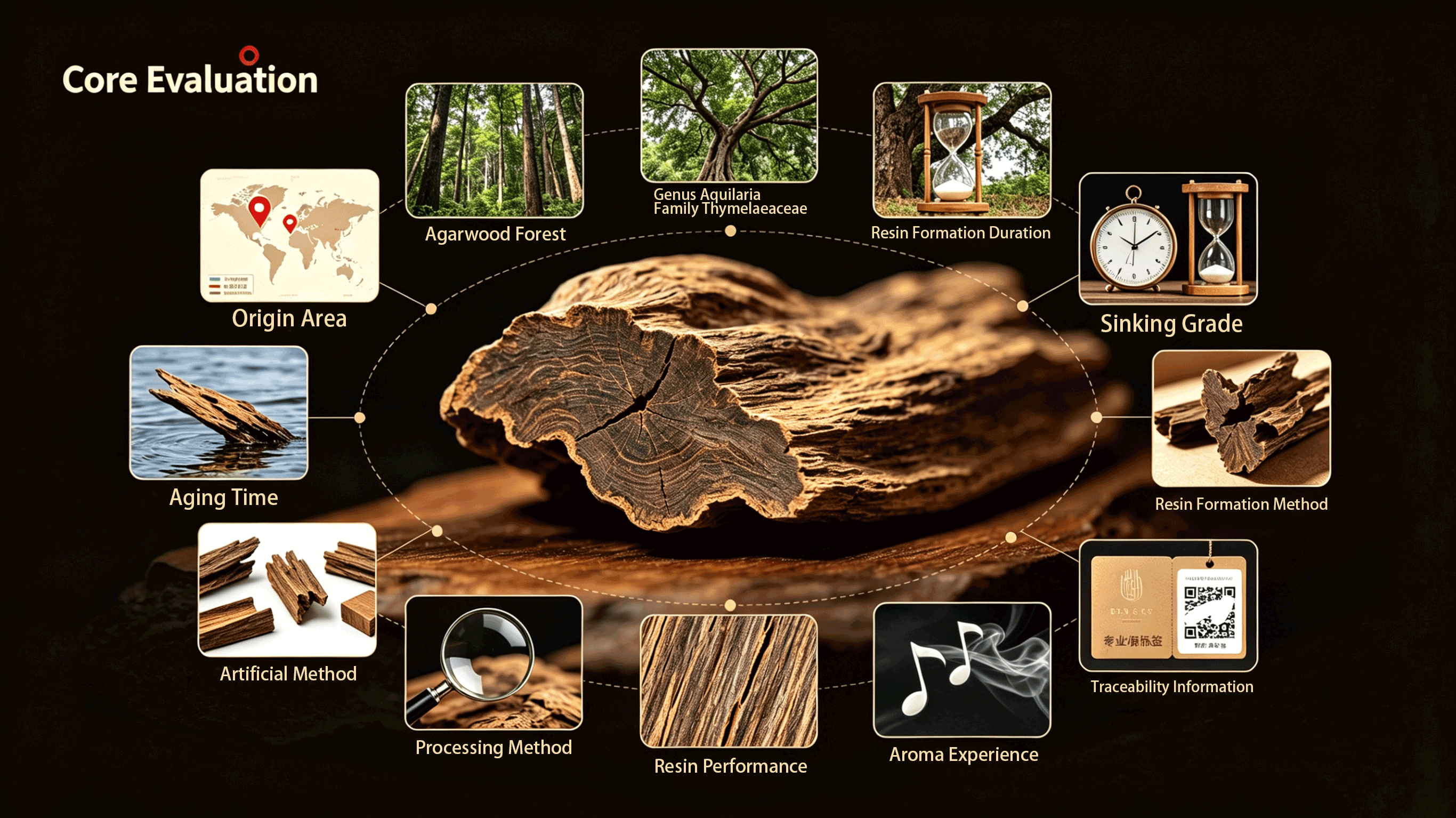
Ten Core Evaluation Dimensions of Agarwood Quality
The quality of agarwood is determined by ten core dimensions, each directly affecting its price and user experience:
Basic Identification (Mandatory Uniform Labeling by PUMING)
- Origin Area: Core producing regions determine the basic keynote of fragrance.
- Sinking Grade: An intuitive reflection of resin content, accurate to 1%. The higher the resin content, the higher the grade.
- Aging Time: The years of natural cellaring after agarwood harvesting; longer aging brings richer, softer aroma.
- Resin Formation Method: Scientific artificial resin formation ensures stable quality. Premium cultivated agarwood is superior to illegally felled wild agarwood, whose value only lies in scarcity.
In-depth Identification (Labeled as Required)
- Aroma Experience: Hierarchy of top, middle and base notes, purity and fragrance retention durability.
- Tree Species: Different species of Aquilaria under the Thymelaeaceae family have obvious differences in aromatic characteristics.
- Processing Method: Processing techniques affect appearance; agarwood of the same grade shows different color and texture due to different craftsmanship.
- Resin Formation Duration: The number of years from tree injury to complete resin formation; longer formation time leads to fuller resin.
- Resin Performance: Resin density, uniformity of distribution and oil line texture.
- Traceability Information: A complete traceable chain covering planting, resin formation, processing and circulation.
PUMING insists on marking 100% transparently all core indicators that determine pricing. It rejects inflated grades and ambiguous information, so consumers do not need to bargain or second-guess sellers. They can judge product quality merely through published data and confidently pick suitable agarwood for themselves.